What School Accountability Means for K-12 Districts

What School Accountability Means for K-12 Districts
When a school receives a lower-than-expected accountability rating, district leaders have questions to answer. Which student groups are falling behind? Do certain campuses need additional support?
School accountability gives K-12 districts a way to measure how well schools serve students and where additional support may be needed. Through established academic standards, student assessments, performance indicators, and reporting requirements, states evaluate school performance and track progress toward educational goals.
For district leaders, accountability involves more than reviewing a school’s end-of-year rating. The work includes collecting reliable information, monitoring student performance, meeting reporting requirements, and using results to guide school improvement. These responsibilities span federal, state, and district levels, with specific measures and expectations varying by state.
By understanding how school accountability works, administrators can interpret performance data, prepare for reporting requirements, and link assessment results to decisions that support student achievement.

Core Components of School Accountability
A school accountability rating reflects several connected processes. To evaluate schools, states:
- Establish academic expectations
- Determine how performance will be measured
- Use assessment results and other indicators
Districts must track the information feeding into those evaluations.
Test scores receive considerable attention, but they are only part of the picture. Accountability measures may also include:
- Chronic absenteeism
- English language proficiency
- High school graduation rates
- College and career readiness
These measures fit into a broader accountability framework. While the specific measures differ by state, most accountability systems include the following components:
Looking at these indicators together helps administrators understand where students are succeeding and where schools may need to adjust their approach.
Accountability Promotes Transparency, Improvement, and Compliance
Families want to know how their children's schools are performing. Teachers want to understand whether their instructional efforts are helping students progress. District leaders need reliable information to determine where resources and support will have the greatest impact.
Accountability reporting brings some of these questions into the open. Published school ratings and state report cards give communities access to information about public school performance and give administrators a starting point for evaluating district priorities.
There are several practical benefits:
- Transparency: Families and community members can review school performance, academic achievement, and progress toward state goals. Curriculum transparency also helps families understand what students are learning and the expectations guiding instruction.
- Improvement: Assessment results can show where students are struggling. For example, if math proficiency declines at a particular campus, district leaders can investigate instructional practices and determine whether additional intervention is needed.
- Compliance: Districts must meet applicable federal and state reporting requirements. Maintaining complete records helps administrators prepare required reports and respond to state reviews.
- Equity: Disaggregated data can expose differences in outcomes among student groups. This matters especially when overall school performance looks strong, but students receiving special education services or other populations are not making comparable progress.
- Student outcomes: Monitoring academic growth, graduation rates, and postsecondary readiness helps districts evaluate whether students are on track to meet their goals.
Providing access to curriculum transparency information helps schools build understanding and trust with their communities.
Every Student Succeeds Act: A Federal Framework for State Accountability Systems
Why can a school receive a different accountability rating in Texas than it would in another state? Much of the answer comes down to the flexibility built into federal education law.
The Every Student Succeeds Act (ESSA), signed into law in 2015, replaced the No Child Left Behind Act and established requirements for state accountability systems. It requires states to evaluate schools using multiple indicators while allowing them to determine many of the specific measures and methods.
Required indicators include:
- Academic achievement
- High school graduation rates
- English language proficiency
- At least one additional measure of school quality or student success
ESSA also places considerable attention on student groups. Schoolwide averages alone can hide achievement differences, so states must examine outcomes for specific populations and identify schools that need additional support.
Two important identification categories are:
- Comprehensive Support and Improvement: These schools have significant performance concerns and require comprehensive improvement efforts.
- Targeted Support and Improvement: These schools have one or more student groups that consistently underperform and need targeted support.
Reporting is another central part of ESSA. States must publish report cards containing school and district performance information, giving families and communities a clearer view of educational outcomes. Understanding ESSA requirements helps identify information that must be collected, reported, and maintained to meet federal expectations.

State Accountability Systems Turn Federal Requirements Into Local Processes
Federal legislation sets the expectations, but state education agencies determine how many of those expectations translate into day-to-day district responsibilities.
That distinction matters when administrators oversee campuses across different grade levels or work to meet changing state requirements. The following are not standardized across the nation:
- Indicators
- Rating calculations
- Reporting schedules
- Improvement processes
Texas provides a useful example. The Texas Education Agency (TEA) evaluates public school districts and campuses through three accountability domains:
- Student achievement measures academic performance, including state assessment results.
- School progress evaluates academic growth and performance compared with similar schools.
- Closing the gaps examines whether different student groups are meeting performance expectations.
Together, these domains contribute to the accountability ratings assigned to Texas districts and campuses. Graduation rates and college, career, and military readiness also play a role in the state's broader accountability framework.
For Texas districts, these requirements make it especially important to monitor student progress throughout the school year. For example, changes to assessment or intervention requirements, such as those outlined in Texas HB 1416, can affect how districts organize instructional support and track student progress.
Knowing which indicators matter in your state is essential for preparing reporting deadlines and understanding what the results actually mean.
Accurate Assessment Operations Support Reliable Accountability Data
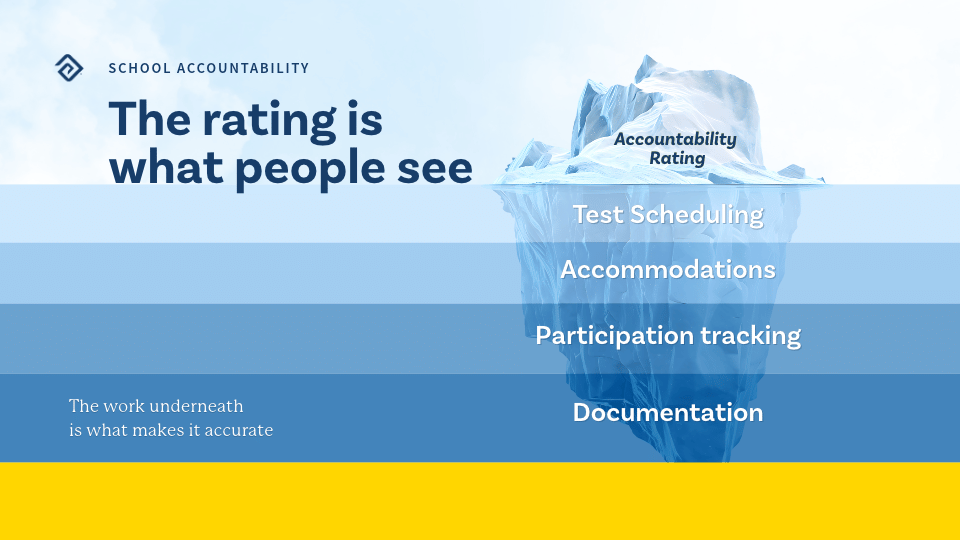
Consider what happens before an assessment result ever appears on a school report card. Someone coordinates the testing schedule, confirms student assignments, checks accommodations, and makes sure participation records are complete.
For district testing coordinators, that work can involve hundreds or thousands of students across multiple campuses. A missed accommodation or incorrect testing assignment can create problems that take considerable time to resolve.
These operational details matter because assessment information feeds into accountability reporting. Districts need dependable processes for managing:
- Test scheduling: Districts coordinate testing windows, students, campuses, and assessments while minimizing disruptions to instructional time.
- Accommodations: Schools ensure eligible students, including those receiving special education services, receive required testing support.
- Student rosters: Districts maintain records of which students tested and which assessments they completed.
- Documentation and reporting: Schools keep testing records organized to meet state and district requirements.
When this information lives in separate spreadsheets or requires repeated manual updates, keeping everything current becomes a job in itself. Testing coordinators may spend hours checking records and tracking down missing information, particularly during busy assessment windows.
Assessment coordination software helps districts manage these responsibilities with better visibility into schedules, student accommodations, and testing requirements. It also gives staff more time to focus on the assessment process rather than administrative work.
Put Accountability Information To Work Across Your District
An accountability rating tells district leaders where a school stands, but understanding why requires a closer look at the information behind it. Administrators can use those findings to guide instructional decisions and monitor student progress over time.
TestHound helps districts coordinate state and local testing, manage student accommodations, and reduce testing coordinators’ workload. With these responsibilities organized in a connected system, districts can spend less time managing testing logistics and more time responding to student needs.
Explore TestHound to see how your district can better manage the work behind school accountability.

More Great Content
We know you'll love